Most buyers expect their agent to warn them about serious crime or a troubling history. In reality, the law doesn’t work that way. To protect yourself, you need to understand where an agent’s legal obligations end and where your own research must begin.
Why Realtor Neighborhood Safety Disclosure Is Limited
When you tour a home, it’s natural to ask, “Is this a safe area?” and hope for a clear yes or no. Brokerages train agents to avoid labeling neighborhoods as “good,” “bad,” “safe,” or “dangerous.” Those labels can trigger fair-housing violations tied to race, family status, or other protected characteristics..[collins]
On top of that, disclosure rules are written around the property itself, not how the surrounding streets feel at night. That means you can sign every disclosure form, get a perfectly staged home, and still know almost nothing about the real‑world safety picture once you move in.
What Realtor Disclosure Laws Actually Cover
In simple terms, disclosure laws focus on what’s inside the house:
- Structural problems (like foundation cracks, roof leaks, major water damage).
- Serious system issues (electrical, plumbing, HVAC failures).
- Known environmental hazards (lead paint in older homes, asbestos, toxic contamination).
The law calls these “material defects” because they directly affect a property’s value and physical safety. If the seller or agent knows about them, they’re usually required to share that information.
Sellers and agents usually do not have to volunteer psychological or neighborhood-level issues.:
- The reputation of the block or area.
- General crime levels or “bad vibes.”
- Past murders, suicides, or other disturbing events, which many states treat as stigmas rather than physical defects.
Some states go further. In New York, “stigmatized property” laws allow sellers to withhold information about deaths or crimes unless buyers ask directly.[ragette]
Inside vs. outside the walls
A helpful way to think about this is “inside the walls” versus “outside the walls.”
Inside the walls (more likely to be disclosed):
- Active leaks and chronic moisture or mold problems.
- Termite or pest infestations that damaged the structure.
- Broken furnaces, unsafe wiring, or overloaded panels.
- Known flood damage or ongoing drainage problems.
Outside the walls (often not required or allowed):
- Whether the area “has a lot of crime.”
- Whether neighbors are loud, hostile, or involved in illegal activity.
- How often police are called to the block.
- Whether the home or street has a disturbing crime history.
Even sensitive issues like nearby registered sex offenders sit in a gray area. If you’re wondering how proximity can affect resale value, read does living near a registered sex offender lower property values? In some states, agents treat a known offender as a material fact. In many others, brokers tell agents not to answer directly. Instead, they refer buyers to the official registry to avoid misstatements or privacy violations.
This is why many buyers use a structured checklist before committing. Our guide on how to check if a neighborhood is safe before buying or renting walks through the exact steps.
To see how this plays out in real life, look at how some buyers describe their experiences after the fact.
Real stories of buyers blindsided by crime
“We didn’t know about the murder and constant police calls”
One buyer shared that they became interested in a house only to learn from neighbors that, after the original owner died, things spiraled. Friends of the widower started squatting, there were about 15 police calls in a year, and the home eventually saw a drive‑by shooting and a violent murder none of which was visible from the listing or the first showing.[reddit]
“Our dream house came with creepy threats”
In Westfield, New Jersey, the Broaddus family bought what they thought was their dream home, then started receiving anonymous, threatening letters from someone calling themselves “The Watcher.” The letters mentioned their children, referenced watching the house for decades, and scared them so much they never moved in, ultimately selling at a loss to escape the situation.
“Nice house, bad neighborhood I regret buying”
Another homeowner described buying a “nice” house that checked all the boxes on paper, only to discover once they moved in that they didn’t feel safe outside. They talked about being uncomfortable walking even in the afternoon, experiencing frequent catcalling, and seeing bricks and broken glass everywhere issues that never showed up on the listing sheet.[reddit]
“We found our soon‑to‑be home on a crime show”
In another case, a buyer discovered right before closing that the house they were under contract to buy had appeared on a crime show. The property was tied to a cold case involving the rape and murder of a 20‑year‑old woman, later linked to a suspect through DNA decades after the fact. The house looked great on paper, but its history came as a shock.[reddit]
These stories underscore a hard truth: the standard home‑buying process is not built to proactively surface neighborhood‑level danger or disturbing history for you. Understanding realtor neighborhood safety disclosure limits can prevent expensive regret later.
Why Realtor Neighborhood Safety Disclosure Isn’t Enough
Because of these limits, disclosure forms and agent conversations only give you a partial picture. Three big forces push the responsibility back onto you:
- Fair housing and steering rules
Agents risk serious legal trouble if they steer clients toward or away from areas based on who lives there. Saying “this is a bad neighborhood” or “this area isn’t great for families” can be read as code tied to race, income, or family status. Many brokerages train agents to avoid answering safety and crime questions directly and instead point buyers to neutral data sources.[collins] - Laws that assume you’ll research
Industry guidance often tells agents to remind buyers that it’s the buyer’s job to investigate crime rates, offender registries, and other safety concerns before closing. Regulators increasingly expect buyers to use easily available public information instead of relying on vague “don’t worry, it’s fine” assurances.[cresinsurance] - Safety is personal, not universal
What feels acceptable to one person may be a deal‑breaker for another. A night‑shift nurse walking in from the car at 2 a.m., a parent with kids at a nearby park, and a remote worker at home all day will notice and care about different things. Only you can decide what level of risk feels livable.
Simple ways to check neighborhood safety yourself
You don’t need to be an analyst to get a much clearer picture than the listing provides. A practical, consumer‑friendly checklist:
- Look up crime patterns by address
Use local crime maps or city data portals to see incidents around the specific address, not just the city name. Focus on trends within 1–3 miles: break‑ins, car thefts, assaults, vandalism. - Check your state’s sex‑offender registry
If you have kids, work from home, or are just risk‑averse, plug in the address and see who is registered nearby. Laws often assume buyers will do this on their own. - Walk and drive the area at different times
Visit early morning, after dark, and on weekends. Pay attention to lighting, foot traffic, open businesses, and how your body feels: relaxed or on edge.[tralonhomes] - Scan local chatter
Browse neighborhood apps or local forums to see what people complain about most: package thefts, car break‑ins, gunshots, or mostly lost cats and yard sales.
An hour or two of this kind of checking can reveal things the seller and agent aren’t required or sometimes allowed to spell out.
Many buyers do some of this research. Few do all of it consistently for every address they consider.
Where HoodScore fits in
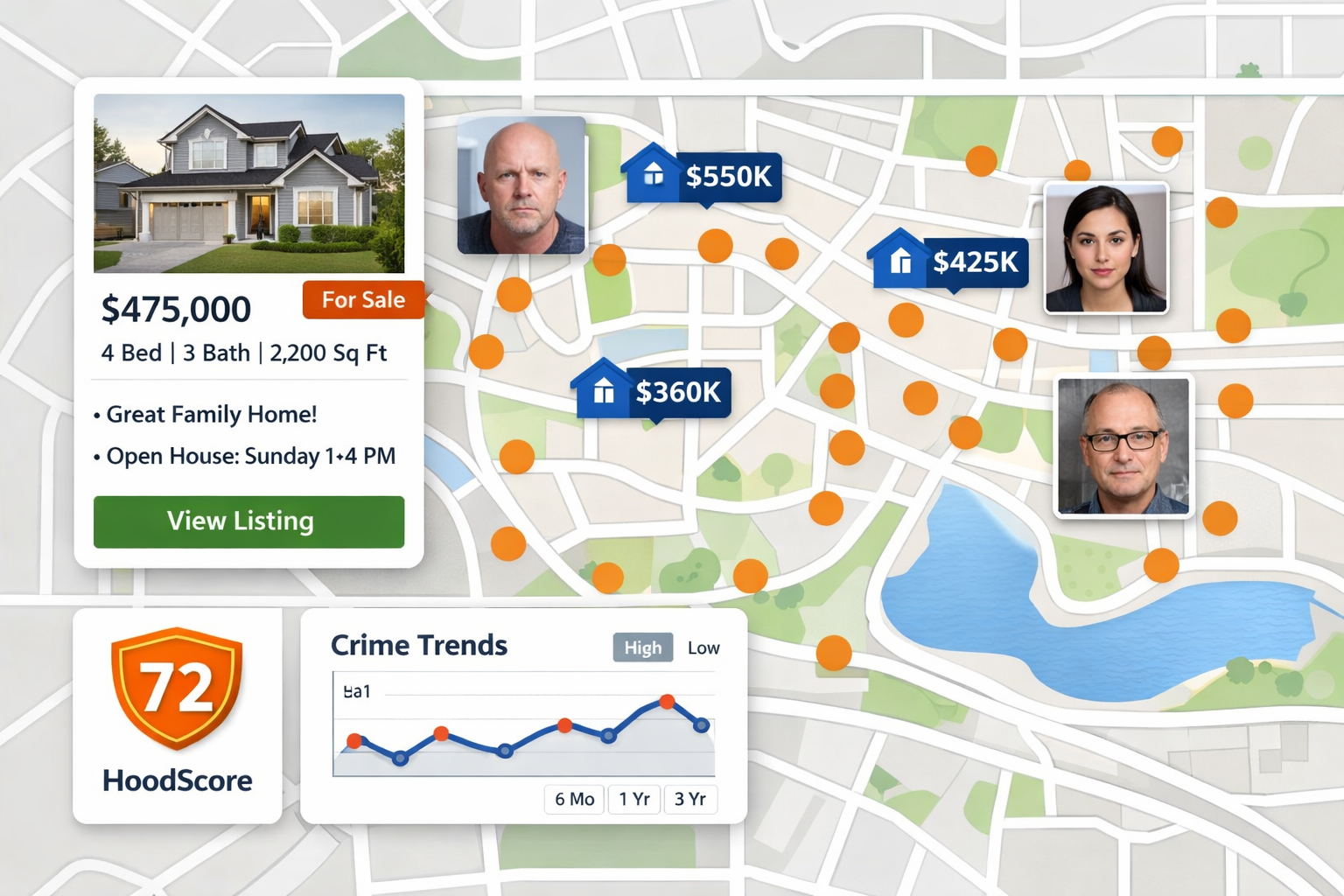
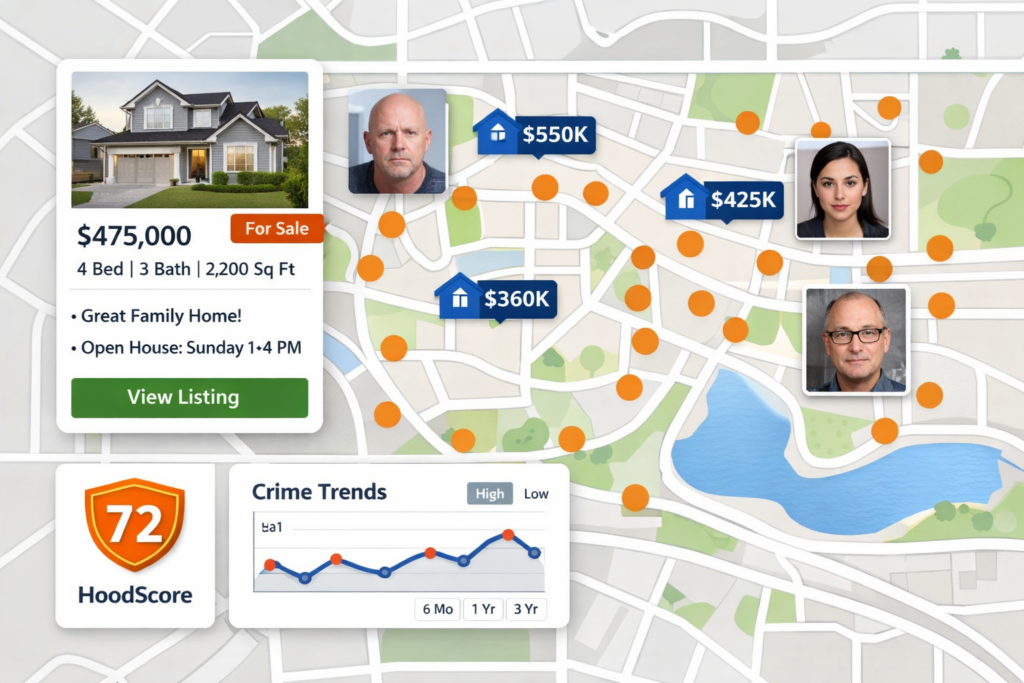
This is exactly the gap that a tool like HoodScore is designed to fill. Instead of leaving you to cobble together bits and pieces from different websites, HoodScore pulls together crime patterns, offender proximity, and other safety signals around a specific property so you can see beyond the listing photos and staged open house.
Used well, it lets you:
- Compare multiple addresses on neighborhood safety, not just price and finishes.
- Spot clusters of incidents or offenders within a radius that might change how you feel about walking the dog at night.
- Pair your gut feeling from walking the area with objective data before you sign anything long‑term.
Crucially, HoodScore doesn’t attack agents. It respects that they’re operating under legal and ethical rules and gives you the neighborhood‑level safety context they often can’t provide directly.
Before you commit: check the neighborhood before you sign
Here’s the takeaway to drive home in your post: the listing shows you the house; the disclosures show you known physical problems; your agent guides you through the process. But only you can decide whether the surrounding neighborhood feels safe enough to call home.
Before you sign an offer, drop contingencies, or commit to a lease, take that one extra step: check the neighborhood before you sign. Run a HoodScore report on the address you’re serious about, review the safety picture, and then decide if the home, the price, and the area all line up with how you actually want to live.
If you’re unsure what crime data actually includes and what it doesn’t see our guide on how crime and safety data are collected and reported.